
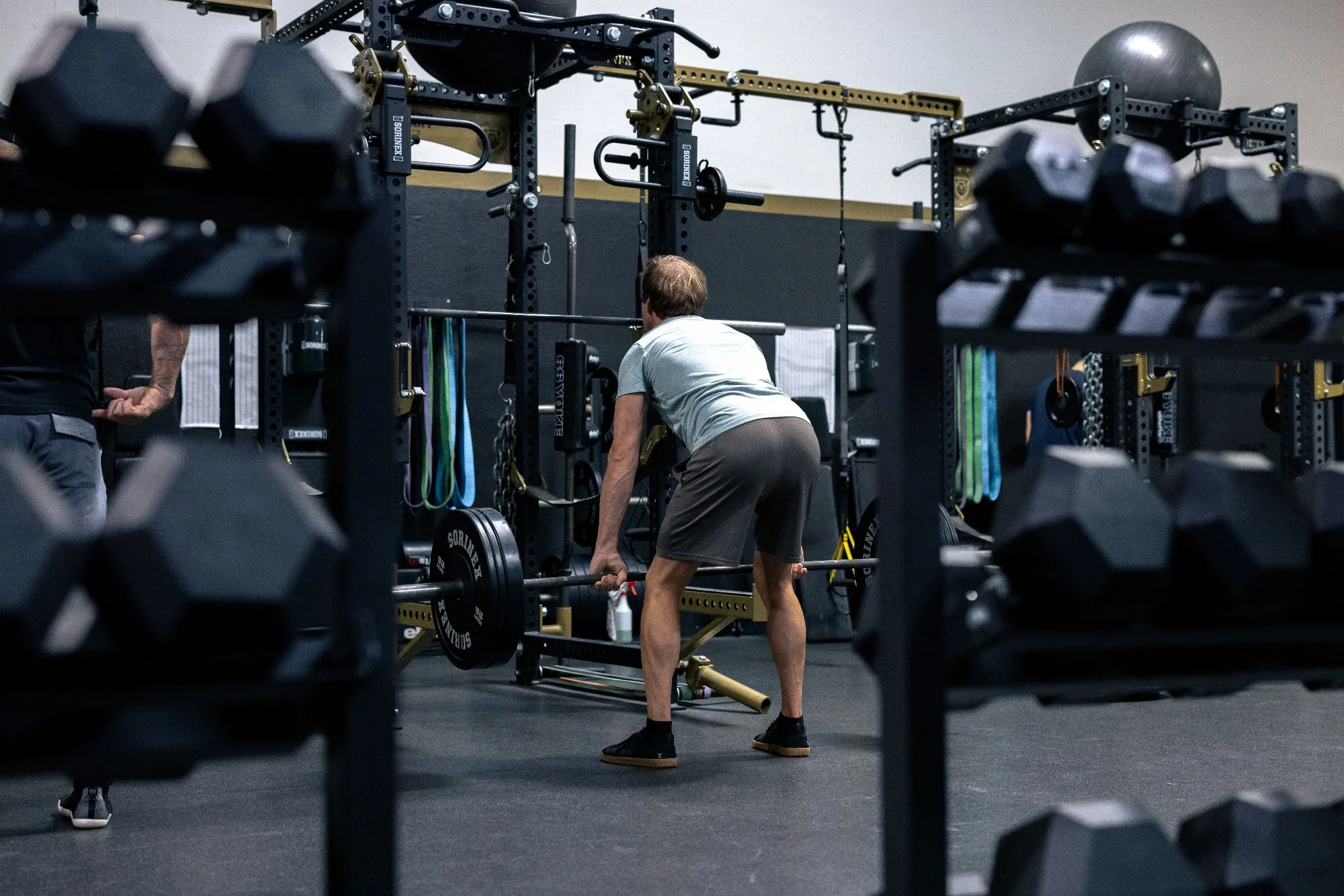
Most adults can benefit from strength and conditioning training three to four days per week, with the ideal frequency depending on fitness goals, training experience, workout intensity, and recovery needs. A balanced routine combines resistance exercises to build strength with conditioning activities that improve cardiovascular fitness, muscular endurance, and overall athletic performance. Understanding how to schedule these sessions helps you make consistent progress without accumulating excessive fatigue.
This guide explains recommended weekly training frequencies, sample workout schedules, recovery strategies, and common mistakes to avoid.
At Legendary Strength Company in Lake Forest, strength is the purpose of every class, and conditioning supports it. If you are new to the distinction, read our guide to strength training vs. conditioning before choosing your weekly schedule.
What Is Strength and Conditioning Training?
Strength and conditioning training combines resistance exercises and physical conditioning to improve muscular strength, endurance, power, mobility, and cardiovascular fitness. A well-designed program develops several aspects of physical performance instead of focusing on a single fitness measure.
Strength Training vs. Conditioning: What's the Difference?
Strength training focuses on increasing the force your muscles can produce, while conditioning improves your ability to sustain physical effort and recover between bouts of activity. Both approaches contribute to overall fitness, but they use different training methods.
- Strength training: Uses weights, resistance machines, dumbbells, barbells, or bodyweight exercises to develop muscular strength and size.
- Cardiovascular conditioning: Uses activities such as cycling, running, rowing, or swimming to improve heart and lung function.
- Muscular endurance training: Uses repeated movements and sustained efforts to help muscles perform longer before fatigue.
- Power training: Incorporates explosive movements, such as jumps and medicine ball throws, to improve how quickly you generate force.
Combining these methods creates a more balanced foundation for everyday activities, recreational sports, and demanding physical challenges.
Why Strength and Conditioning Workouts Are Important
Strength and conditioning workouts improve physical performance by developing muscles, cardiovascular capacity, movement control, and resilience to exercise-related demands. Consistent training can also support bone health, balance, body composition, and the ability to perform daily activities.
Key benefits include:
- Greater muscular strength: Resistance training makes lifting, carrying, pushing, and pulling easier over time.
- Improved cardiovascular fitness: Conditioning develops aerobic capacity and helps you sustain physical activity.
- Better athletic performance: A combination of strength, speed, power, and endurance supports sports-specific movements.
- Increased functional capacity: Stronger muscles and better conditioning can make everyday physical tasks less demanding.
- Support for long-term health: Regular physical activity contributes to metabolic health, mobility, and healthy aging.
The right balance depends on your priorities, so your program should reflect the activities you want to perform better.
How Often Should You Do Strength and Conditioning Training Each Week?
Most beginners should start with two to three training days per week, while intermediate lifters may benefit from three to five sessions and advanced athletes may train five or six days with carefully managed intensity. These ranges are starting points, not requirements, because your total workload and recovery capacity matter as much as the number of sessions.
| Fitness level | Recommended weekly frequency | Main priority |
|---|---|---|
| Beginner | 2 to 3 days | Learn technique and build consistency |
| Intermediate | 3 to 5 days | Develop strength and conditioning capacity |
| Advanced | 4 to 6 days | Improve specialized performance and manage training load |
These recommendations refer to planned training sessions, not necessarily hard workouts every day. Walking, mobility work, and easy recovery activities can fit between demanding sessions.
Strength and Conditioning Training Frequency for Beginners
Beginners should generally perform strength and conditioning training two to three days per week, leaving time between challenging sessions to learn proper technique and recover. Full-body workouts are often effective because they train the major muscle groups without requiring a complicated weekly schedule.
A beginner routine may include:
- Two full-body resistance sessions each week.
- One additional session of light to moderate cardio.
- Short mobility sessions on rest days.
- At least one full rest day when fatigue or soreness requires it.
Start with manageable resistance and controlled movements instead of immediately pursuing heavy weights or intense intervals. After several weeks of consistent training, increase the workload gradually if your technique, energy, and recovery remain stable.
Strength and Conditioning Training Frequency for Intermediate Lifters
Intermediate lifters can often train three to five days per week because they have developed more exercise experience and a better understanding of their recovery needs. A combination of full-body workouts, upper-body and lower-body sessions, and dedicated conditioning days can provide enough training volume to continue progressing.
For example, you might perform three resistance workouts and two conditioning sessions weekly, adjusting the intensity to avoid excessive fatigue. The most effective schedule is one that supports steady improvements in strength and endurance without compromising performance between workouts.
Strength and Conditioning Training Frequency for Advanced Athletes
Advanced athletes may train four to six days per week when their programming, nutrition, sleep, and recovery strategies support the workload. Their schedules often include specialized sessions for maximal strength, explosive power, sport-specific conditioning, and movement quality.
Higher frequency does not automatically produce better results, especially when every session is demanding. Advanced trainees should vary workout intensity, distribute training volume intelligently, and schedule lighter days to maintain performance throughout the week.
What Factors Determine Your Ideal Strength Training Frequency?
Your ideal strength training frequency depends on your goals, experience, workout demands, and ability to recover between sessions. Two people following different schedules can make similar progress when each routine provides an appropriate amount of training stimulus.
Your Fitness Goals
Your primary fitness goal determines how much time you should dedicate to strength work, conditioning, or a combination of both. Training for maximal strength requires a different balance than preparing for a long-distance event or improving general fitness.
Consider these general guidelines:
- Building muscle: Train each major muscle group approximately twice per week, using enough challenging sets to support growth.
- Increasing maximal strength: Prioritize progressive resistance training, with sufficient rest between demanding sets and sessions.
- Improving endurance: Schedule regular aerobic conditioning, supplemented with strength work to support muscular function.
- Developing athletic performance: Combine strength, power, mobility, and sport-specific conditioning according to your competitive demands.
- Maintaining general fitness: Use a sustainable mix of resistance training and cardiovascular activity throughout the week.
If you have several goals, establish one primary priority and organize the remaining workouts around it.
Your Current Fitness Level and Training Experience
Your current fitness level influences how frequently you can train productively because your muscles, connective tissues, and movement skills need time to adapt. Beginners generally benefit from fewer, well-executed sessions, while experienced trainees can often tolerate more frequent workouts.
Consider increasing your weekly frequency only after you can complete your existing schedule consistently without persistent soreness, declining performance, or excessive fatigue. If you are returning after a long break, begin with a reduced workload rather than immediately resuming your previous routine.
Workout Intensity and Training Volume
Workout intensity and total training volume determine how demanding each session is and how much recovery it requires. Heavy lifting, high-volume resistance workouts, and intense interval training generally place greater demands on the body than short, easy sessions.
For example, four moderate workouts may be easier to recover from than three sessions that all involve heavy lifting and all-out conditioning. Adjust the number of sets, repetitions, resistance, duration, and effort level together instead of increasing every training variable at once.
Strength Training Recovery Time
Strength training recovery time varies with workout difficulty, training experience, sleep, nutrition, and individual physiology, but many people need approximately 48 hours before performing another hard session for the same muscle groups. This is a practical guideline rather than a fixed biological rule, since lighter sessions may require less recovery and demanding workouts may require more.
You can manage recovery by alternating muscle groups, varying session intensity, and avoiding repeated high-effort workouts that target the same tissues without sufficient rest. Your next session should depend on your readiness and performance, not simply the number of hours that have passed.
How to Create an Effective Strength and Conditioning Program
An effective strength and conditioning program balances resistance training, cardiovascular conditioning, mobility, and recovery around your goals and available schedule. Start with a manageable weekly plan, then adjust the workload according to measurable progress and how well you recover.
Build your routine around these principles:
- Choose your main goal: Identify whether strength, muscle growth, endurance, or athletic performance deserves the most attention.
- Schedule resistance training: Include exercises for all major muscle groups across the week.
- Add conditioning sessions: Use aerobic exercise, intervals, or sport-specific drills that suit your current fitness level.
- Plan recovery: Alternate demanding sessions with lighter activity or rest.
- Progress gradually: Increase resistance, repetitions, duration, or workload when your current routine becomes manageable.
- Track your results: Record workout performance, energy levels, and recovery to identify what works.
If you need guidance structuring a sustainable routine, Legendary Strength Co. can be a resource to explore as you refine your approach to strength and conditioning.
Sample 3-Day Strength and Conditioning Workout Schedule
A three-day schedule works well for beginners and busy adults who want to develop strength and conditioning without training every day. Leave a rest or light-activity day between demanding sessions to help manage fatigue.
| Day | Training focus | Example activities |
|---|---|---|
| Monday | Full-body strength | Squats, presses, rows, core exercises |
| Wednesday | Strength and conditioning | Deadlift variation, lunges, push-ups, moderate intervals |
| Friday | Full-body strength and aerobic fitness | Resistance exercises followed by easy cycling or brisk walking |
| Other days | Recovery | Walking, gentle mobility, or complete rest |
Keep the first few weeks manageable and focus on movement quality before increasing resistance or conditioning intensity. If combining strength and cardio makes your workouts too long, separate the activities across different days.
Sample 4-Day Strength and Conditioning Workout Schedule
A four-day schedule provides more opportunities to distribute training volume and separate upper-body, lower-body, and conditioning work. It can suit intermediate trainees who recover well from regular exercise.
| Day | Training focus | Example activities |
|---|---|---|
| Monday | Upper-body strength | Bench press, rows, overhead press, pulldowns |
| Tuesday | Lower-body strength | Squats, Romanian deadlifts, split squats, calf raises |
| Wednesday | Recovery | Walking or mobility work |
| Thursday | Conditioning | Cycling, rowing, running, or controlled intervals |
| Friday | Full-body strength and power | Compound lifts, medicine ball throws, jumps when appropriate |
| Weekend | Recovery or easy activity | Walking, gentle cycling, or rest |
Keep explosive exercises early in the workout when you are fresh, and use controlled technique throughout the session. If Friday's workout affects your recovery for the following week, reduce the volume or replace the power work with lower-intensity exercises.
Should You Do Strength Training and Conditioning on the Same Day?
You can perform strength training and conditioning on the same day, and doing so can be an efficient way to fit both into a busy schedule. The best order depends on which activity matters most to your goals and how demanding each session will be.
Strength Training Before Conditioning
Perform strength training first when building muscle, increasing maximal strength, or improving lifting performance is your main priority. Starting with resistance exercises helps you approach technically demanding movements with less accumulated fatigue.
A practical session might include 35 to 50 minutes of resistance training followed by 10 to 20 minutes of moderate cardio. Keep the conditioning portion shorter or less intense if it begins to interfere with your lifting performance or recovery.
Conditioning Before Strength Training
Perform conditioning first when endurance performance is your main objective or your training session centers on a specific cardiovascular target. For example, a runner preparing for a race may prioritize the planned running workout before completing a shorter resistance session.
Avoid exhausting yourself with intense intervals before heavy or technically complex lifts. If both activities require high effort, consider separating them instead of compromising the quality of either session.
Separating Strength and Conditioning Sessions
Separating strength and conditioning sessions can help you maintain workout quality when both activities require substantial effort. You might lift in the morning and perform conditioning later in the day, or schedule each activity on different days.
When sessions occur on the same day, several hours between them can be useful, particularly when both are demanding. Your total workload, training goals, and available recovery still determine whether this approach is appropriate.
How Much Recovery Time Do You Need Between Strength and Conditioning Workouts?
Many people benefit from approximately 24 to 48 hours between demanding workouts that stress the same muscle groups, with longer recovery periods sometimes needed after unusually intense sessions. Recovery requirements depend on the exercises performed, total volume, training experience, sleep, nutrition, and overall stress.
Use these general guidelines to plan your schedule:
- Same muscle groups: Allow around 48 hours after a challenging session before training them hard again, adjusting as needed.
- Different muscle groups: Alternate upper-body and lower-body sessions when it helps distribute fatigue.
- Easy conditioning: Light walking or gentle cycling may be appropriate on recovery days.
- High-intensity intervals: Allow enough recovery to maintain good technique and effort during your next demanding session.
- Complete rest: Take a full day off when fatigue, soreness, or declining performance indicates that additional exercise would be counterproductive.
Recovery is part of the training process, not a break from progress. Consistently pushing through excessive fatigue can make it harder to maintain good technique and achieve the intended training stimulus.
Signs You May Need More Recovery Time
You may need more recovery time if your performance declines, soreness persists, or your normal workouts begin to feel unusually difficult. One difficult day does not necessarily indicate a problem, but repeated symptoms suggest your schedule may be too demanding.
Watch for these signs:
- Persistent muscle soreness that interferes with normal movement.
- Declining strength, speed, endurance, or workout quality.
- Unusual fatigue or reduced motivation to exercise.
- Difficulty sleeping or feeling rested.
- Increased irritability or difficulty concentrating.
- Repeated minor injuries or discomfort that worsens during training.
Reduce your workload and prioritize recovery if these signs continue. Seek medical advice for severe or persistent symptoms, unusual weakness, or pain that does not improve with rest.
How to Improve Recovery Between Workouts
You can improve recovery by sleeping consistently, eating enough to support your workload, staying hydrated, and managing training intensity. These habits help you prepare for your next session and maintain a more sustainable routine.
Focus on the following practices:
- Sleep: Most adults should aim for at least seven hours per night, with individual needs varying by age and activity level.
- Nutrition: Eat sufficient calories, protein, carbohydrates, and nutrient-rich foods to support training and tissue repair.
- Hydration: Replace fluids lost through sweat, especially during prolonged exercise or hot conditions.
- Active recovery: Use gentle walking, easy cycling, or comfortable mobility exercises when appropriate.
- Workload management: Increase training demands gradually and schedule easier sessions when fatigue accumulates.
If your performance remains poor despite improving these habits, reassess your weekly training volume and consider professional guidance.
Common Strength and Conditioning Training Mistakes to Avoid
The most common strength and conditioning training mistakes involve excessive workload, poor exercise balance, rapid progression, and insufficient recovery. Avoiding these problems helps you develop fitness more consistently while reducing unnecessary setbacks.
Training Too Frequently Without Adequate Recovery
Training too frequently without enough recovery can reduce performance and make it harder to adapt to exercise. Add rest days, alternate muscle groups, and vary intensity instead of treating every workout as a maximum-effort session.
Focusing Only on Strength or Conditioning
Focusing exclusively on strength or conditioning can leave gaps in your overall physical fitness. Include both resistance and cardiovascular exercise, adjusting the proportions according to your goals and any sport-specific requirements.
Increasing Workout Intensity Too Quickly
Increasing workout intensity too quickly can place more stress on muscles, joints, and connective tissues than your body is prepared to handle. Progress by making small, manageable changes to resistance, repetitions, duration, or frequency rather than increasing everything at once.
Following a Training Schedule That Does Not Match Your Goals
A training schedule that does not match your goals can waste time and limit progress. Prioritize the activities most relevant to your desired outcome, then organize secondary exercises around them.
Ignoring Nutrition, Sleep, and Mobility
Ignoring nutrition, sleep, and mobility can undermine training consistency and recovery. Support your workouts with adequate food, regular sleep, appropriate hydration, and mobility exercises that address your movement needs.
How to Know If Your Strength and Conditioning Training Schedule Is Working
Your training schedule is working when you see gradual improvements in performance, recover adequately between sessions, and can maintain the routine consistently. Progress does not always happen every week, so evaluate trends over several weeks rather than judging success by one workout.
Track Strength and Endurance Improvements
Track strength and endurance improvements by recording the exercises, resistance, repetitions, workout duration, and perceived effort for each session. Over time, you should see meaningful changes in one or more of these measures if your training matches your goals.
Useful indicators include:
- Lifting more weight with controlled technique.
- Completing additional repetitions at the same resistance.
- Maintaining a faster pace during a comparable cardio workout.
- Exercising longer before reaching a similar level of fatigue.
- Performing familiar movements with better control and confidence.
Compare similar workouts under similar conditions so that changes in performance provide useful information.
Monitor Recovery and Energy Levels
Monitor recovery and energy levels to determine whether your schedule provides enough training stimulus without excessive fatigue. Consistent energy, manageable soreness, stable sleep, and steady workout performance generally indicate that your workload is appropriate.
If you regularly feel exhausted or your performance declines, reduce training volume or intensity before adding more sessions. A sustainable routine should challenge you while still allowing you to meet your work, family, and everyday responsibilities.
Adjust Your Strength Training Frequency as You Progress
Adjust your strength training frequency when your goals, schedule, experience, or recovery capacity changes. You might add a session when progress stalls because of insufficient training volume, or remove one when fatigue consistently outweighs the benefits.
Review your program every four to six weeks and consider:
- Are your strength or endurance measures improving?
- Can you complete sessions with good technique?
- Are you recovering before your next demanding workout?
- Does your current schedule fit your lifestyle?
- Do your workouts still reflect your main fitness goals?
Make changes based on these observations instead of assuming that more training days always produce better results.
Frequently Asked Questions
Is Strength and Conditioning Training 3 Times a Week Enough?
Yes, strength and conditioning training three times per week is enough for many beginners and general fitness enthusiasts to improve strength, endurance, and overall fitness. Consistent workouts that train major muscle groups and include appropriate conditioning can produce meaningful results when paired with sufficient recovery.
Can You Do Strength and Conditioning Training Every Day?
Yes, you can exercise daily, but you should not perform demanding strength and conditioning workouts at maximum intensity every day. Alternate hard sessions with lighter activity, target different muscle groups, and take rest days when your body needs them.
How Many Days a Week Should Beginners Do Strength and Conditioning?
Beginners should generally start with two to three days of structured strength and conditioning training per week. This frequency provides opportunities to practice technique, develop consistency, and recover before gradually increasing the workload.
Should You Do Cardio on Rest Days From Strength Training?
Yes, light or moderate cardio can fit into rest days from strength training if it does not interfere with recovery. Walking, easy cycling, or gentle swimming can provide cardiovascular activity, but complete rest is appropriate when you feel unusually fatigued or sore.
Is It Better to Do Strength and Conditioning Together or Separately?
Combining strength and conditioning in one workout is convenient, while separating sessions can help preserve performance when both activities are demanding. Prioritize the activity most closely related to your main goal, and choose the schedule that allows you to train consistently and recover well.
Build a Routine That Supports Long-Term Progress
The right strength and conditioning training schedule is one you can maintain consistently while making measurable improvements in strength, endurance, and overall fitness. Start with two to three weekly sessions if you are a beginner, increase frequency as your experience and recovery allow, and adjust your program as your goals evolve. Legendary Strength Co. can be a resource to explore as you work toward a structured training routine that supports your long-term fitness goals.