
Same program. Right variation.
Everyone follows the class program. Your coach can change the exercise variation, load, or range of motion when your ability or movement calls for it.
Strength + Conditioning
Coached strength and conditioning in seven thousand square feet of professional-grade equipment. Serious training scaled to your level, six days a week, with coaches who know how to make the work fit the person doing it.
What makes the class different
Everyone follows the same class program. What can change is the exercise variation, load, or range of motion when the coach needs to scale the work.
Everyone follows the class program. Your coach can change the exercise variation, load, or range of motion when your ability or movement calls for it.
Your coach watches the reps, knows when you are new, and changes an exercise, load, or range of motion in real time when your movement or experience calls for it.
You are building from week to week instead of starting over with a new workout every class.
Inside one hour
The class program changes with the day. Your coach can modify an exercise or load when needed. The structure stays recognizable.
Mobility, activation, and movement prep get the joints and patterns ready for the work ahead.
The main lift is the center of the session, scaled to the variation and load you can execute well today.
Accessory work adds muscle, balance, and structural strength around the main patterns.
Conditioning develops work capacity without turning the session into sixty minutes of random fatigue.
Bring the heart rate down, recover some range of motion, and record the work so the next session starts with context.
Same room. Different starting points.
Everyone can be training the squat pattern without pretending everyone belongs under the same bar.
Learn the pattern, own the range, and build confidence under load.
Add complexity and load when the movement has earned it.
Train serious strength when the skill, structure, and training age support it.
Wherever you are starting
The standard stays high. The starting point changes.
Learn the patterns, find loads you can control, and get more coaching attention while the room becomes familiar.
Rebuild consistency and work capacity while strength comes back only as fast as your movement and recovery support it.
Once you are cleared to train, use ranges and variations you can own instead of forcing a textbook exercise.
Get back to meaningful training quickly without letting old numbers outrank the quality of the rep you can perform today.
The class. The community.
Everyone in the room has their own reason for being there and their own version of the work. But the energy is shared. You notice when someone hits a lift they have been chasing. People learn each other’s names. Coaches know when you have been gone.
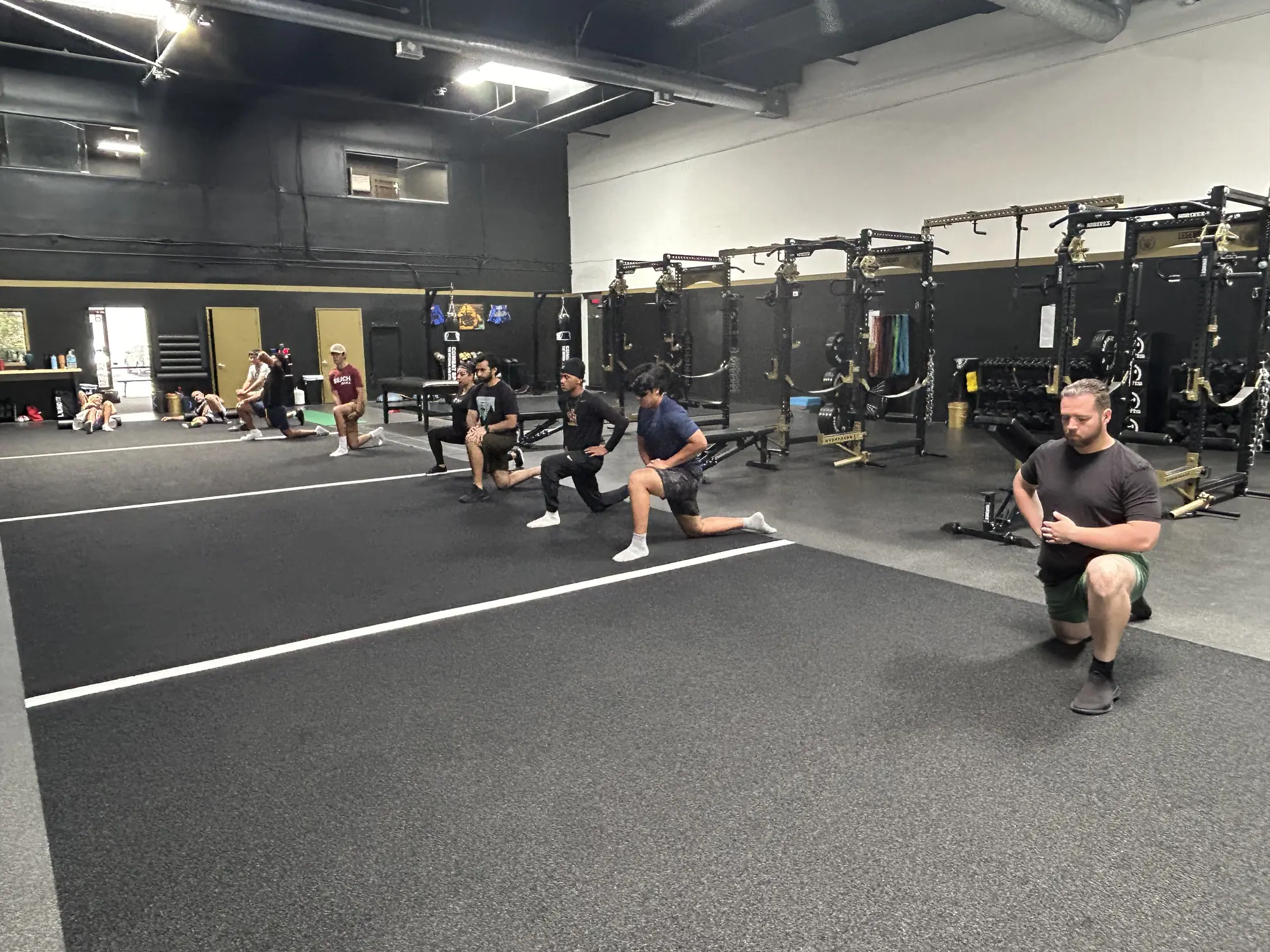
You can train hard without having to prove that you belong in the room.
The member next to you may be lifting a different weight, but they understand what it means when you earn the next one.
Showing up is easier when the same coaches and members notice when you are there and when you have been gone.
How often should you train?
Three days works. Four is what we recommend. Six gives you the full training week. Consistency beats ambition.
Enough consistency to make real progress when three days is what your life can support.
The sweet spot for most members: enough weekly work to progress without crowding recovery.
For members whose schedule and recovery support the complete rotation of training.
Choose the schedule you can hold with confidence, then let the coaching and the room make consistency easier.
Getting started
Your first class is your initial session. Your coach knows you are new, watches how you move while you train, and gives you the amount of attention your experience calls for.
Your coach changes the exercise variation, load, range of motion, or other parts of the class when needed. You do not have to earn your way into the room before you start training.
No separate assessment appointment. No private-session prerequisite. You start by training.
Schedule
Enough options to build training into your week instead of rearranging your life around the gym.