
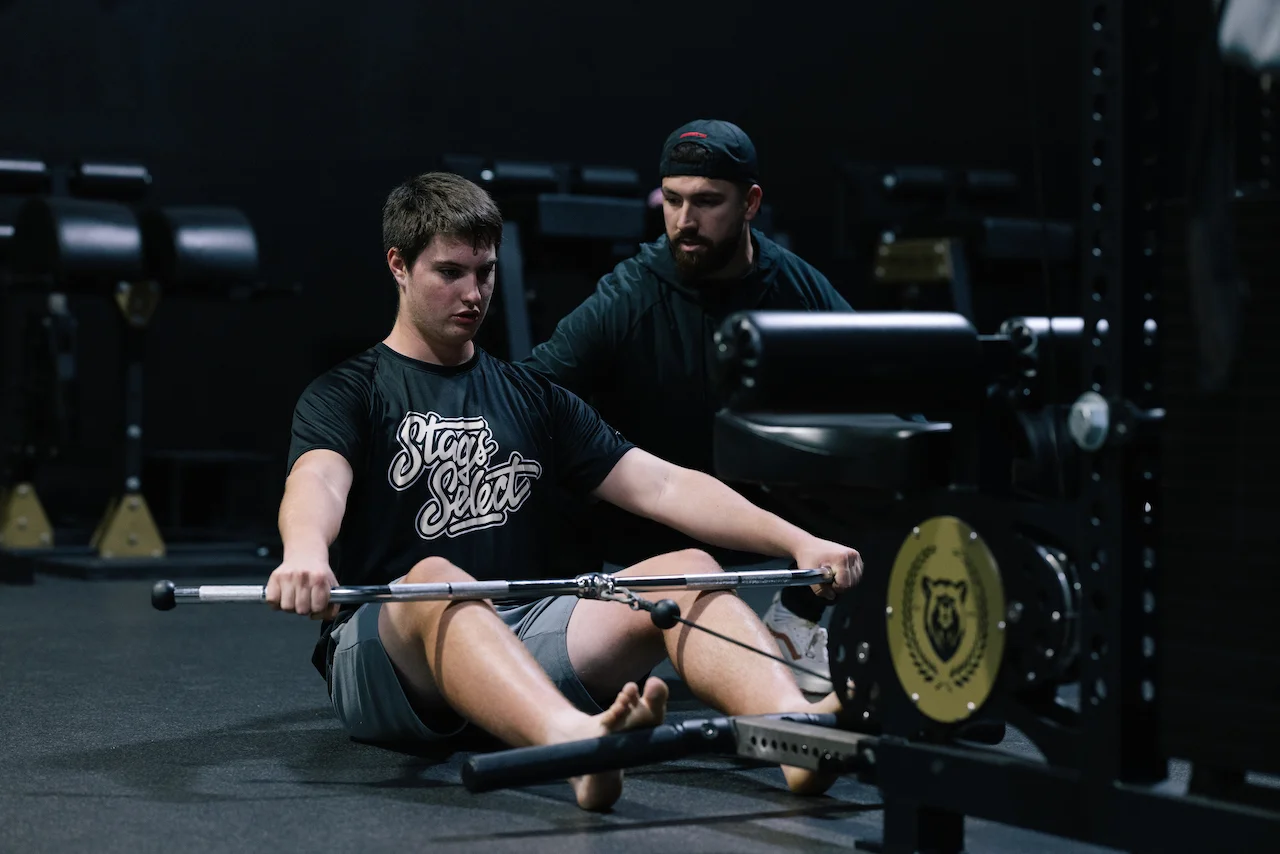
Strength training vs. conditioning comes down to two different fitness priorities: building muscular strength and improving the body's ability to sustain physical activity. Strength training develops muscle force, while conditioning improves cardiovascular endurance, muscular endurance, and overall work capacity.
Both approaches support long-term health, athletic performance, and everyday movement, but they require different exercises, training intensities, and recovery strategies. Understanding how they work can help you choose the right workouts or combine them into a balanced fitness routine.
At Legendary Strength Company in Lake Forest, strength is the purpose of every class. Conditioning supports that strength. Our strength and conditioning classes combine progressive training with individual attention from a coach.
What Is Strength Training?
Strength training is a form of exercise that challenges muscles to produce force against resistance, helping increase strength, muscle size, and physical capacity. It typically involves weights, resistance machines, resistance bands, or bodyweight exercises performed with controlled movements and progressively challenging loads.
How Does Strength Training Work?
Strength training works by exposing muscles to resistance that stimulates physiological adaptations, allowing them to produce more force over time. As the body adapts to training, muscles and the nervous system become better at handling resistance, particularly when workouts include progressive overload and sufficient recovery.
A typical strength-focused session includes:
- Compound exercises: Movements that train multiple muscle groups, such as squats, deadlifts, and bench presses.
- Isolation exercises: Movements that emphasize specific muscles, such as biceps curls and triceps extensions.
- Progressive overload: Gradually increasing weight, repetitions, sets, or exercise difficulty as strength improves.
- Recovery periods: Rest between sets and workouts to support performance and muscle repair.
Training variables depend on the goal, but many muscle-building routines use approximately 6 to 12 repetitions per set, while maximal-strength programs often include heavier loads and fewer repetitions.
Common Strength Training Exercises
Common strength training exercises use external resistance or body weight to challenge specific muscle groups and movement patterns. A balanced routine trains the upper body, lower body, and core to develop strength across the entire body.
Popular options include:
- Squats: Develop the quadriceps, glutes, and other lower-body muscles.
- Deadlifts: Train the posterior chain, including the glutes, hamstrings, and back.
- Bench presses: Strengthen the chest, shoulders, and triceps.
- Rows: Target the upper back, rear shoulders, and biceps.
- Pull-ups: Build upper-body pulling strength.
- Lunges: Improve unilateral leg strength, balance, and stability.
- Planks: Develop core stability and muscular endurance.
Beginners can start with bodyweight variations or lighter resistance before progressing to more challenging exercises.
What Are the Benefits of Strength Training?
The benefits of strength training extend beyond larger muscles, supporting bone health, joint stability, functional movement, and long-term physical independence. Regular resistance exercise can also make everyday activities, including carrying groceries, climbing stairs, and lifting objects, easier to perform.
Key benefits include:
- Increased muscular strength: Helps the body handle heavier loads and demanding physical tasks.
- Muscle growth: Supports hypertrophy when training volume, resistance, nutrition, and recovery are appropriate.
- Stronger bones: Weight-bearing and resistance exercises can help maintain or improve bone mineral density.
- Better joint support: Strengthens muscles that help stabilize joints during movement.
- Improved body composition: Helps maintain or increase lean mass, particularly when combined with appropriate nutrition.
- Greater functional capacity: Makes everyday movements more manageable as physical demands change with age.
For these reasons, strength training is valuable for beginners, experienced athletes, and adults who want to maintain their physical capabilities.
What Is Conditioning in Fitness?
Conditioning in fitness refers to training that improves the body's ability to sustain physical effort, recover between bouts of activity, and perform repeated movements efficiently. Depending on the workout, conditioning can target cardiovascular endurance, muscular endurance, speed, agility, or the ability to repeat high-intensity efforts.
Unlike strength training, which primarily emphasizes force production, conditioning focuses on how effectively the body performs and sustains work.
How Do Conditioning Workouts Improve Endurance?
Conditioning workouts improve endurance by challenging the cardiovascular, respiratory, and muscular systems to deliver and use energy during sustained or repeated activity. Consistent training can improve aerobic capacity, exercise tolerance, and recovery between demanding efforts.
Two common approaches are:
- Aerobic conditioning: Uses sustained activities such as jogging, swimming, and cycling to improve cardiovascular endurance.
- Anaerobic conditioning: Uses short, intense efforts such as sprints and repeated intervals to improve high-intensity performance.
For example, a beginner might cycle at a moderate pace for 20 to 30 minutes, while a more experienced athlete might perform several rounds of short sprint intervals with planned recovery periods.
The appropriate intensity depends on the individual's fitness level, training history, and goals.
Common Conditioning Exercises
Conditioning exercises include activities that challenge the heart, lungs, and working muscles over time or through repeated bursts of effort. The best choices depend on the desired adaptation, available equipment, and the amount of impact a person can comfortably tolerate.
Common options include:
- Running and jogging: Improve aerobic capacity and running endurance.
- Cycling: Builds cardiovascular fitness with adjustable resistance and impact.
- Rowing: Challenges the upper body, lower body, and cardiovascular system simultaneously.
- Jump rope: Develops coordination, rhythm, and cardiovascular endurance.
- Battle ropes: Challenge muscular endurance and repeated upper-body effort.
- Sled pushes: Train full-body work capacity and lower-body endurance.
- Burpees: Combine bodyweight strength movements with cardiovascular demand.
- Interval training: Alternates periods of higher effort with recovery intervals.
Not every conditioning workout needs to be high intensity; moderate, sustained activity is effective for building an aerobic foundation.
What Are the Benefits of Conditioning Exercises?
The benefits of conditioning exercises include improved cardiovascular fitness, greater exercise tolerance, and a better ability to sustain physical activity without becoming fatigued as quickly. Conditioning can also support sports performance by helping athletes maintain movement quality and repeat demanding efforts throughout a game or event.
Additional benefits include:
- Improved cardiovascular health: Regular aerobic activity supports heart and circulatory function.
- Greater stamina: Helps you sustain physical activity for longer periods.
- Better recovery between efforts: Develops the capacity to recover during rest periods and between repeated bouts of exercise.
- Improved movement efficiency: Repeated practice helps the body become more efficient at familiar activities.
- Enhanced athletic performance: Supports sports that require repeated running, jumping, changing direction, or sustained movement.
- Support for weight management: Increases energy expenditure and complements a balanced nutrition plan.
Conditioning is particularly useful for people who want to improve stamina, prepare for endurance events, or handle demanding physical activities with greater efficiency.
Strength Training vs. Conditioning: What Are the Key Differences?
Strength training vs. conditioning involves different primary goals, but the two approaches share some training methods and physiological benefits. Resistance exercises can raise heart rate and develop muscular endurance, while conditioning activities such as hill sprints can challenge the muscles and improve power.
The main distinction is the adaptation each workout prioritizes.
Training Goals: Building Strength vs. Improving Endurance
Strength training primarily develops the ability to produce force against resistance, while conditioning focuses on sustaining effort and recovering effectively during physical activity. Both can improve overall fitness, but the exercises and programming should reflect the desired outcome.
For example, someone who wants to increase their squat strength would prioritize progressively heavier squats, while someone preparing for a 5K race would emphasize running volume, aerobic development, and pacing.
Strength training goals often include:
- Increasing maximal strength.
- Building muscle mass.
- Improving force production and joint stability.
- Developing stronger movement patterns.
Conditioning goals often include:
- Increasing cardiovascular endurance.
- Improving muscular endurance.
- Sustaining performance during prolonged activity.
- Recovering more effectively between intense efforts.
Workout Intensity, Repetitions, and Rest Periods
Strength training generally uses resistance and rest periods that support force production, while conditioning manipulates work duration and recovery to develop endurance or repeated-effort capacity. However, intensity, repetition ranges, and rest periods vary according to the specific training objective.
Typical approaches include:
- Maximal-strength training: Often uses heavy loads, approximately 1 to 5 repetitions per set, and longer rests of 2 to 5 minutes.
- Muscle-building training: Commonly uses moderate loads, with sets of approximately 6 to 12 repetitions and sufficient rest to maintain good technique.
- Aerobic conditioning: Often involves continuous activity for 20 to 60 minutes at a manageable intensity.
- Interval conditioning: Alternates hard efforts with recovery periods, with work intervals ranging from seconds to several minutes.
These are general guidelines rather than strict rules. Effective programming accounts for experience, exercise selection, fatigue, and recovery needs.
Equipment and Training Methods
Strength training often relies on resistance-based equipment, while conditioning frequently uses cardio machines, bodyweight circuits, or activities that keep the body moving for extended periods. You can do both in a gym, at home, or outdoors, depending on the exercises you choose.
| Training factor | Strength training | Conditioning |
|---|---|---|
| Primary goal | Increase force production and muscle development | Improve endurance and work capacity |
| Common equipment | Barbells, dumbbells, machines, resistance bands | Treadmills, bikes, rowers, jump ropes, sleds |
| Typical structure | Sets and repetitions | Timed intervals or sustained activity |
| Rest periods | Usually planned between sets | Depends on activity and intensity |
| Progress tracking | Weight lifted, repetitions, sets, technique | Pace, distance, duration, heart rate, recovery |
| Example session | Squats, presses, and rows | Cycling intervals or steady-state jogging |
The most effective equipment supports your goals and lets you train consistently with proper technique.
Muscle Development vs. Cardiovascular Adaptations
Strength training emphasizes muscular adaptations, while conditioning emphasizes the cardiovascular and energy systems used during physical activity. Both can improve muscular endurance and overall health, but the specific adaptations depend on the training stimulus.
Strength training can increase muscle size, improve nervous system coordination, and strengthen connective tissues over time. Conditioning can improve the body's ability to transport and use oxygen during aerobic activity, while high-intensity intervals can develop the ability to repeat demanding efforts.
These differences explain why lifting heavier weights and running longer distances require related but distinct training strategies.
Strength Training vs. Conditioning Comparison Table
Strength training is generally the better primary choice for increasing maximal strength and muscle size, while conditioning is more directly suited to improving stamina and cardiovascular fitness. Combining them can address multiple fitness needs without requiring every workout to serve the same purpose.
| Fitness goal | Primary training focus | Supporting approach |
|---|---|---|
| Maximum strength | Heavy resistance training | Low-intensity conditioning |
| Muscle growth | Progressive resistance training | Moderate conditioning volume |
| Cardiovascular endurance | Aerobic conditioning | Strength training |
| Repeated high-intensity efforts | Interval conditioning | Strength and power work |
| General health | A balanced combination | Mobility and recovery |
| Everyday functional fitness | Full-body strength training | Walking, cycling, or other aerobic activity |
The right balance depends on your starting point, schedule, health considerations, and preferred activities.
Strength Training vs. Conditioning: Which Is Better for Your Fitness Goals?
Neither strength training nor conditioning is universally better because each develops different aspects of physical fitness. The best starting point is the goal that matters most to you, followed by a plan that maintains the other major components of health.
Is Strength Training or Conditioning Better for Building Muscle?
Strength training is generally more effective for building muscle because progressive resistance provides the mechanical stimulus needed for muscular hypertrophy. Conditioning can contribute to muscle development when it involves substantial muscular resistance, but most traditional cardio workouts are less effective for maximizing muscle growth.
For muscle development, prioritize:
- Training each major muscle group consistently.
- Performing enough challenging sets each week.
- Gradually increasing resistance or repetitions.
- Consuming adequate protein and total calories.
- Allowing enough recovery between demanding sessions.
A practical starting point is to train each major muscle group around twice per week, adjusting volume and intensity to your experience and recovery.
Is Strength Training or Conditioning Better for Weight Loss?
Both approaches can support weight loss, but a sustainable calorie deficit is the primary requirement for reducing body fat. Conditioning increases energy expenditure, while strength training helps preserve lean muscle mass during weight loss.
A balanced plan may include resistance training two to four days per week and aerobic activity spread across the week. Food intake, daily movement, sleep, and workout consistency also influence results.
For individual guidance, our coaches can help you build a routine around your training goals.
Which Is Better for Athletic Performance?
Athletic performance often improves most when strength training and conditioning are combined according to the demands of the sport. Strength supports acceleration, force production, and physical resilience, while conditioning helps athletes sustain performance and recover between efforts.
For example:
- Sprinters: Benefit from strength, power, and short high-intensity conditioning.
- Soccer players: Need lower-body strength, aerobic fitness, and repeated-sprint capacity.
- Distance runners: Prioritize aerobic conditioning while using strength training to support running economy and muscular resilience.
- Basketball players: Combine strength and jumping power with agility and repeated-effort conditioning.
Training should reflect the actual movement patterns, intensity, and energy demands of the athlete's sport.
Which Is Better for Beginners?
Beginners benefit from both approaches, but a manageable full-body strength routine and regular low-to-moderate-intensity aerobic activity provide a practical foundation. Starting gradually allows new exercisers to learn proper movement patterns, build consistency, and improve fitness without excessive fatigue.
A beginner might start with two full-body resistance sessions and two or three walking or cycling sessions each week. You can progress the schedule as your technique, stamina, and recovery improve.
Can You Combine Strength Training and Conditioning Workouts?
Yes, you can combine strength and conditioning workouts to build muscle, improve endurance, and develop more complete physical fitness. A well-designed strength and conditioning program balances resistance training, aerobic activity, recovery, and progression according to your main goal.
The key is to manage training volume so conditioning doesn't consistently compromise strength performance or recovery.
Should You Do Strength Training Before or After Conditioning?
Perform strength training first when building muscle or maximal strength is your main priority, because lifting while fresh can help maintain technique and force production. If endurance is your primary goal, doing conditioning first may better support the quality of your main workout.
Consider these guidelines:
- Strength priority: Lift first, then add a short, manageable conditioning session if needed.
- Endurance priority: Do your key cardio workout while fresh, then schedule strength training around it.
- Balanced fitness: Separate demanding sessions by several hours or place them on different days when practical.
- Same-session training: Keep the secondary workout shorter when fatigue starts affecting technique or performance.
The best sequence is the one that protects the quality of your most important training session.
How Many Days a Week Should You Do Strength and Conditioning?
Most adults can build a balanced routine with two to four strength sessions and regular aerobic activity, depending on training experience, goals, and recovery capacity. Federal physical activity guidelines recommend at least 150 minutes of moderate-intensity aerobic activity per week, or 75 minutes of vigorous activity, plus muscle-strengthening activity on at least two days.
A weekly schedule could include:
- 2 to 3 strength sessions: Full-body workouts or an upper-body and lower-body split.
- 2 to 3 conditioning sessions: Walking, cycling, swimming, or structured intervals.
- 1 to 2 easier days: Rest, mobility work, or light recreational activity.
Some sessions can overlap, and not every conditioning workout needs to be intense. Beginners should build toward these targets gradually, particularly after a long period of inactivity.
Sample Weekly Strength and Conditioning Program
A sample weekly strength and conditioning program can combine three resistance sessions with two conditioning sessions while leaving room for recovery. The following schedule is a general example that can be adjusted for individual fitness levels and equipment access.
| Day | Workout | Primary focus |
|---|---|---|
| Monday | Full-body strength | Major muscle groups and force production |
| Tuesday | Moderate cycling or brisk walking | Aerobic endurance |
| Wednesday | Full-body strength | Resistance progression |
| Thursday | Easy walking or rest | Recovery |
| Friday | Full-body strength | Strength and muscle development |
| Saturday | Conditioning intervals or steady cardio | Work capacity and stamina |
| Sunday | Rest or gentle mobility | Recovery |
Keep the sessions appropriate for your experience and reduce the workload if fatigue accumulates. Beginners can replace intervals with moderate walking or cycling until their aerobic foundation improves.
Common Mistakes to Avoid in Strength Training and Conditioning
The most common training mistakes include using poor technique, neglecting recovery, performing excessive conditioning, and failing to progress systematically. Avoiding these errors helps make workouts more productive and reduces the risk of preventable injuries.
Prioritizing Intensity Over Proper Technique
Proper technique should take priority over lifting heavier weights or completing conditioning intervals at maximum speed. Poor movement quality can shift stress to unintended areas, reduce exercise effectiveness, and increase injury risk.
Choose loads and speeds that allow controlled, repeatable movements, then increase difficulty as your technique improves.
Neglecting Recovery Between Workouts
Recovery is essential because training creates fatigue that the body must manage before adapting to additional demands. Insufficient rest, inadequate nutrition, and poor sleep can reduce performance and make it harder to sustain a consistent routine.
Allow demanding muscle groups adequate recovery, aim for seven to nine hours of sleep per night as an adult, and reduce training volume when persistent fatigue develops.
Doing Too Much Conditioning Without Considering Strength Goals
Excessive conditioning can interfere with strength and muscle-building progress when it creates more fatigue than the body can recover from. This is particularly relevant when frequent, high-intensity cardio sessions are paired with demanding lower-body resistance workouts.
Maintain enough conditioning to support cardiovascular health, but adjust its frequency, intensity, and duration if lifting performance or recovery begins to decline.
Failing to Apply Progressive Overload
Progressive overload is the gradual increase in training demands that encourages continued improvement in strength, muscle development, or endurance. Without a clear progression strategy, the body may adapt to a routine and produce slower results.
You can progress by increasing resistance, adding repetitions, improving technique, extending aerobic duration, or performing the same workload at a lower perceived effort. Change one or two variables at a time instead of increasing every training demand simultaneously.
Following a Programme That Does Not Match Your Fitness Goals
A training program should reflect your primary objective, available time, current ability, and recovery needs. Someone preparing for a long-distance race needs a different balance of strength and conditioning than someone focused on muscle growth.
Set a measurable goal, establish a realistic weekly schedule, and review your progress every few weeks to determine whether the plan needs adjustment.
How to Choose the Right Strength Training and Conditioning Program
The right strength and conditioning program matches your fitness goals, experience, schedule, and ability to recover between sessions. Rather than copying an advanced athlete's routine, start with a manageable structure and increase training demands as your fitness improves.
Use these steps to choose an appropriate plan:
- Define your primary goal. Decide whether muscle growth, maximal strength, endurance, weight management, or general health is your main priority.
- Assess your current fitness. Consider your training experience, mobility, stamina, and any health limitations.
- Choose the right training balance. Allocate more sessions to your primary goal while maintaining other important fitness components.
- Set a realistic schedule. Choose a number of weekly workouts you can maintain consistently.
- Track measurable progress. Record weights, repetitions, workout duration, distance, or other relevant performance measures.
- Plan for recovery. Include rest days, adequate nutrition, and sufficient sleep.
- Adjust based on results. Increase workload gradually and modify the plan if progress stalls or fatigue becomes excessive.
If you have a chronic health condition, significant joint pain, or a history of injury, consult an appropriate healthcare professional before beginning a demanding exercise program. A qualified trainer can also help you learn technique and select exercises that suit your abilities.
Build a Stronger, Better-Conditioned Body With the Right Training Approach
Strength training and conditioning serve different purposes, but combining them can create a more balanced approach to fitness. Resistance training develops strength and muscle, while conditioning improves stamina, cardiovascular capacity, and the ability to sustain physical effort.
Start by identifying your main goal, then build a weekly routine that gives it enough attention without neglecting recovery or general health. At Legendary Strength Company, coaching and programming keep strength at the center, with conditioning that supports it and adjustments for your current abilities.
Consistent workouts, progressive training demands, sound technique, and adequate recovery matter more than an unnecessarily complicated schedule. With the right plan, you can develop greater strength, improve endurance, and build fitness that supports both everyday activities and long-term performance.
Frequently Asked Questions
What Is the Main Difference Between Strength Training and Conditioning?
The main difference is that strength training primarily develops the muscles' ability to produce force, while conditioning improves endurance, cardiovascular fitness, and the ability to sustain physical activity. Both contribute to overall fitness, but they emphasize different physiological adaptations.
Is Strength Training the Same as Strength and Conditioning?
No, strength training is one component of strength and conditioning. Strength and conditioning combines resistance exercise with other training methods, such as aerobic conditioning, power development, agility, and endurance work, to improve overall physical performance.
Can Strength Training Improve Cardiovascular Endurance?
Strength training can increase heart rate and improve muscular endurance, particularly during full-body circuits and higher-repetition workouts. However, dedicated aerobic activities such as brisk walking, cycling, swimming, and running are generally more effective for directly developing cardiovascular endurance.
Can You Build Muscle With Conditioning Workouts?
You can build some muscle through conditioning workouts that involve substantial resistance, particularly if you are a beginner or returning to exercise. However, progressive resistance training is generally more effective for maximizing muscle growth because it allows you to systematically increase the load placed on targeted muscles.
Should Beginners Start With Strength Training or Conditioning?
Beginners can start with both strength training and low-to-moderate-intensity conditioning to develop a balanced fitness foundation. Two full-body resistance sessions and a few manageable walking or cycling sessions per week can provide a practical starting point, with gradual progression as fitness and recovery improve.